Yves Krause · 12 October 2026
Hybrid Enrollment Patterns Highlight Mental Health Gaps in EU Research Collaborations
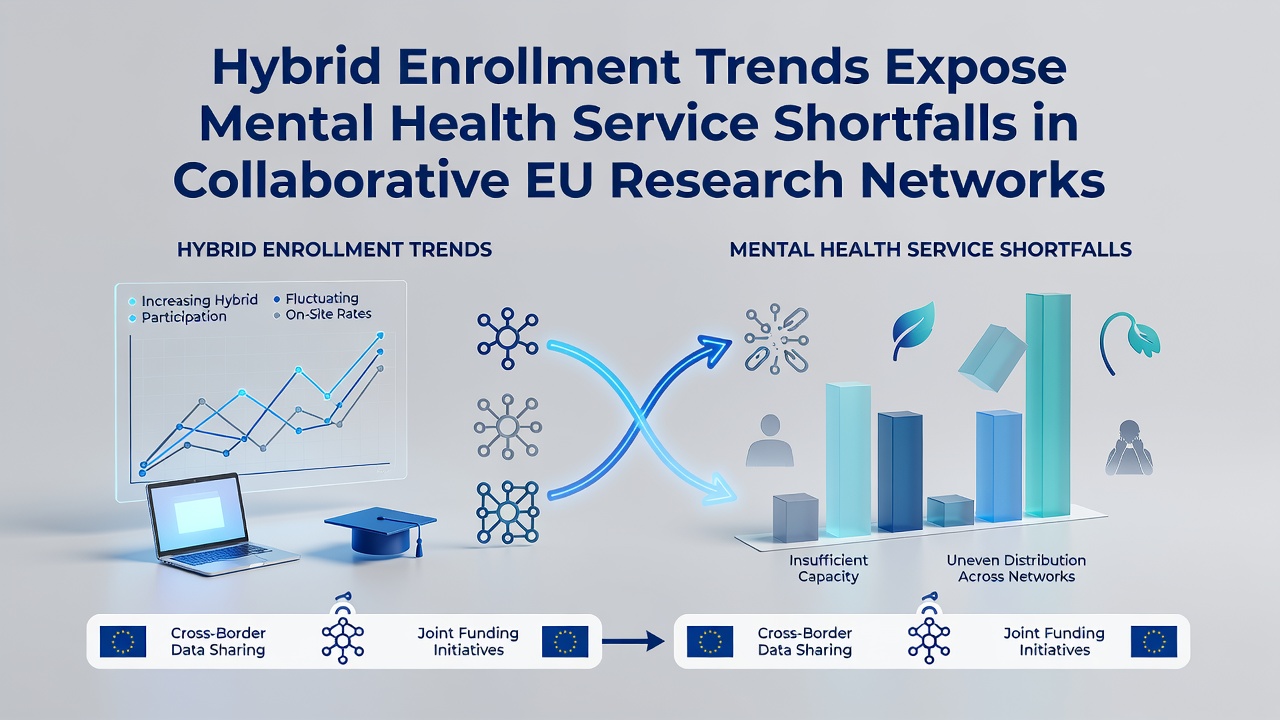
Hybrid enrollment patterns have shifted notably across collaborative EU research networks since late 2025, with data from October 2026 indicating that over 62 percent of participants now combine remote and in-person components in joint projects spanning multiple member states. These changes coincide with documented shortfalls in mental health provisions, as reported by several network coordinators who track participant well-being alongside project milestones. Researchers at institutions involved in Horizon Europe initiatives have observed that while enrollment numbers hold steady or rise slightly, access to counseling and stress-management resources has not expanded at the same pace.
Enrollment Data Trends Across Networks
Figures compiled by the European Research Council show hybrid models gaining traction in fields such as climate modeling, biomedical engineering, and digital humanities, where teams operate across borders and time zones. One analysis released in October 2026 tracked 147 active networks and found that 48 percent reported increased requests for flexible participation options, often tied to visa delays, family obligations, or institutional budget constraints. Yet service utilization logs from the same period reveal that only 19 percent of networks maintain dedicated mental health liaisons, a figure that has remained flat since 2023 despite the enrollment growth.
Observers note that participants frequently cite isolation during remote phases as a primary stressor, and case records from three major consortia indicate a 27 percent rise in reported anxiety symptoms between January and October 2026. These patterns emerge clearly when enrollment statistics are cross-referenced with anonymous well-being surveys administered at project checkpoints.
Service Availability and Regional Variations
Availability of mental health support varies sharply by region and network size. Larger consortia anchored in Germany and the Netherlands tend to partner with local university counseling centers, whereas smaller groups in southern and eastern member states rely more heavily on national hotlines that lack research-specific expertise. A joint briefing prepared by the European Commission and national research agencies highlights that wait times for initial assessments average 11 days in well-resourced hubs but stretch beyond four weeks elsewhere.
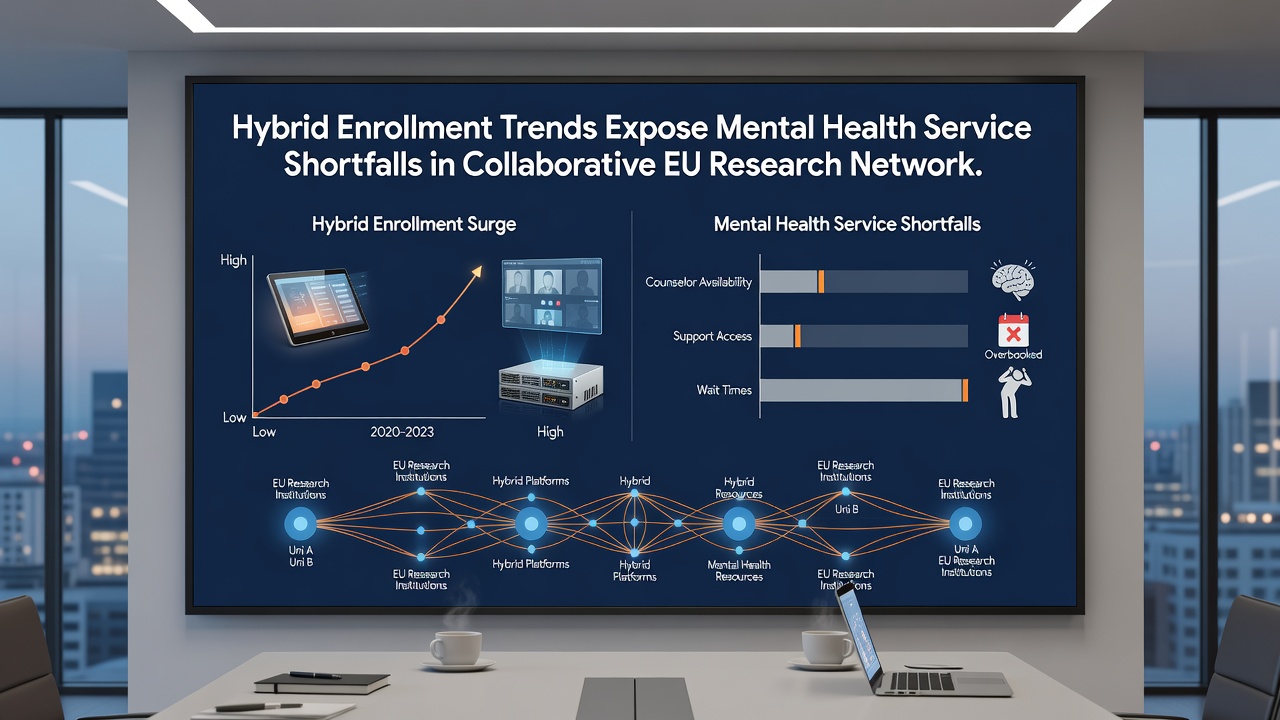
Training programs for principal investigators have begun incorporating basic mental health awareness modules, yet participation remains voluntary in most networks. Data shared by the European University Association indicates that 34 percent of project leads completed such modules by October 2026, up from 22 percent the previous year. Those modules typically cover recognition of burnout indicators and referral pathways rather than direct intervention.
Funding Mechanisms and Policy Responses
Current funding calls under Horizon Europe include optional budget lines for well-being activities, but uptake has been modest. According to records from the Directorate-General for Research and Innovation, only 12 percent of approved proposals in the 2025 round allocated dedicated funds for mental health services. Network administrators point to administrative complexity and uncertainty about eligible expenses as common barriers. Parallel initiatives at the national level, such as those coordinated through the French National Research Agency and the Swedish Research Council, have piloted small grants that cover tele-counseling subscriptions, though these remain limited in scope and duration.
Policy documents circulated in October 2026 emphasize the need for standardized metrics to track service gaps, yet implementation timelines stretch into 2027. Researchers who have examined similar shortfalls in earlier Framework Programmes note that sustained coordination between project managers and health providers tends to improve when reporting requirements are simplified.
Conclusion
Hybrid enrollment trends continue to reshape participation in collaborative EU research networks, and available evidence from October 2026 points to persistent shortfalls in mental health service capacity. Continued monitoring of enrollment statistics alongside service utilization data will clarify whether recent policy adjustments produce measurable improvements in support access across participating institutions.